Not good – very good 

Isita’s consultant Giuseppe just came in to her room on the Friday afternoon ‘grand’ ward round. “We got Isita’s MIBG results,” he said, with a slight pause of forgivable theatre. “They were clear”.

“Good”, I said.

“Not ‘good’”, he responded. “I would say very good.”

It appears that the tumour has shrunk and there are no ‘lesions’ anywhere in here body. This is the best possible news.

Now we need the results of the trephines they took this morning. These are samples of bone from two places in her lower back. We already know from the aspirates that they took a month ago that the marrow itself is clear, but often the cancer cells adhere to the inner wall of the bone.

If the trephines are not clear, Isita will need an extra course of regular chemotherapy. If they are clear then we have a bit of a race on our hands to get rid of the last traces of the adenovirus so Isita can start the high dose chemotherapy before 19 June, with surgery probably having to take place before that. 

There is a lot to unbundle from within that, and plenty of variables. But the simple takeaway is that there is no better news we could have heard today.

Exam week 

Isita is still in hospital,  and still on marvellous form. She has watched Pocahontas about 10 times, cooked up dozens of bowls of playdoh spagetti soup, and never stops chatting- the best indication of her wellbeing.

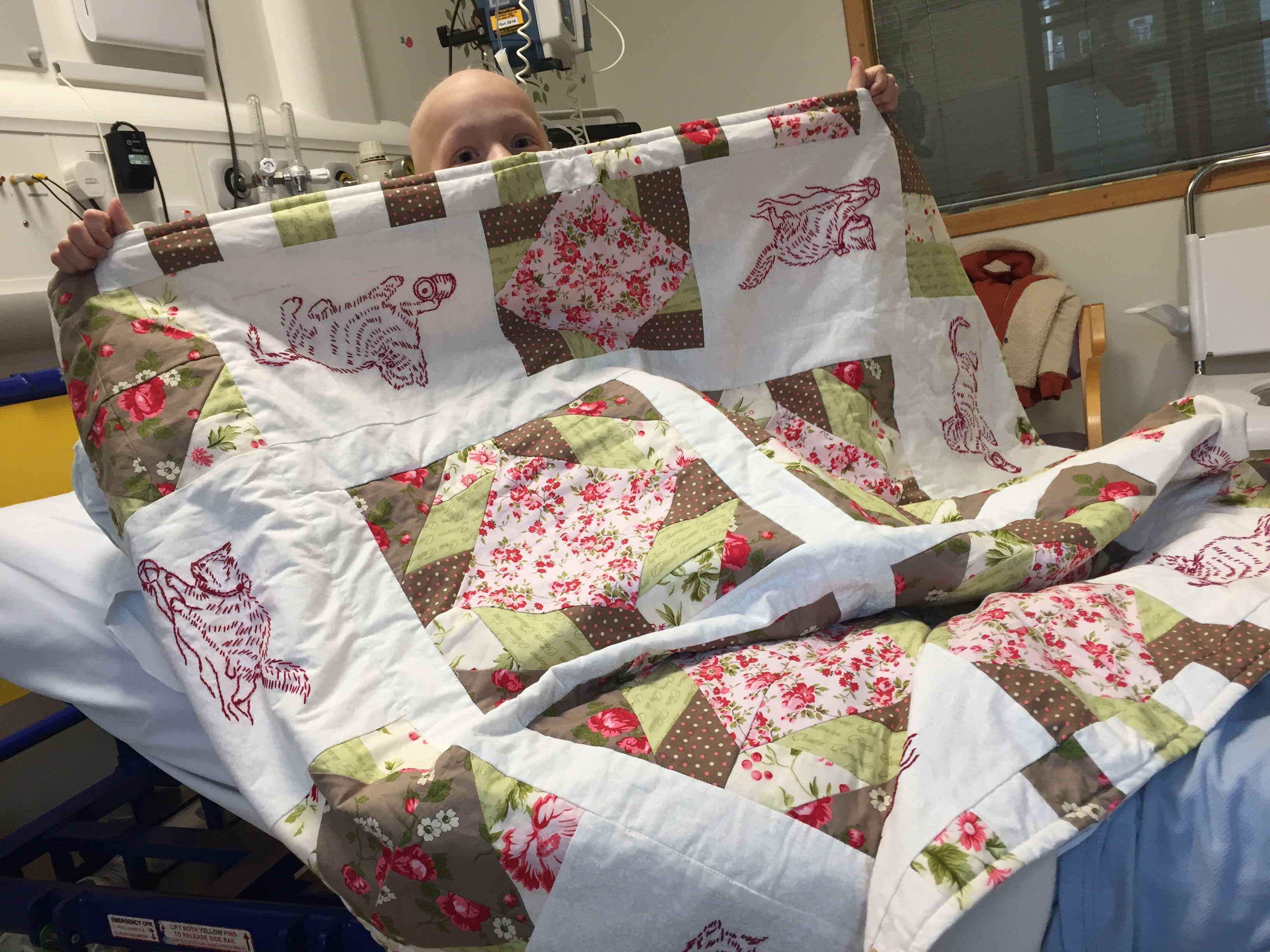
Yesterday someone from Project Linus came by and gave her a barn quilt embroidered with cats. We are constantly amazed by the generosity of the volunteers and donors who give so much to Isita and the other children at the hospital.


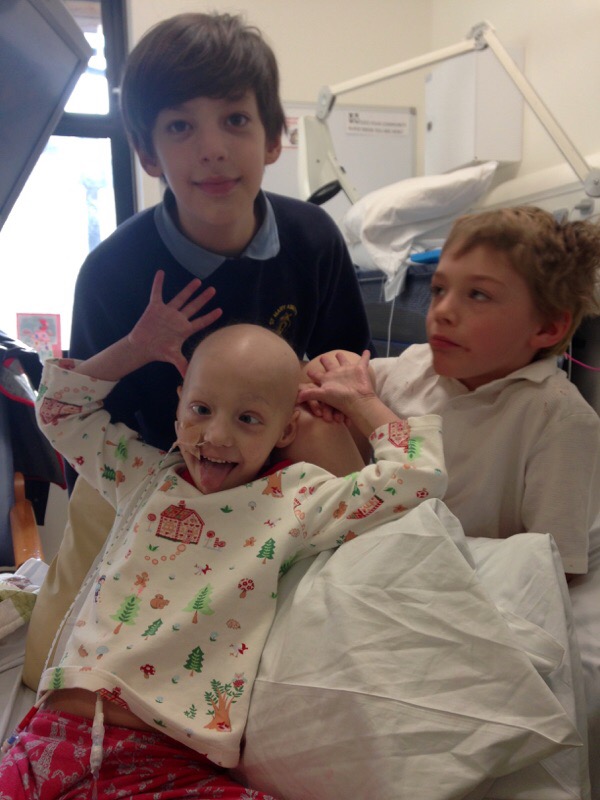
Then my godson Jem and his mother Caitlin came by, and Jamie was there too. 


Isita’s kidneys are still leaky, but there are signs that this is getting better. They are topping her up with what she needs and the levels are becoming more stable.

At the same time there are lots of tests going on. She had the MIBG scan yesterday, will have the bone marrow aspirates and trephines tomorrow morning and the MRI tomorrow afternoon. Marta and I are meeting the surgeon on Monday morning and Isita’s main consultant on Thursday. As pieces of information from the tests come available we should learn about them, and the decisions on the next stages of treatment should be taken by the end of next week.

Blue light ride

Isita is back at GOSH. She came here from St Mary’s yesterday afternoon in an ambulance with the blue light flashing, which she was thrilled about. This episode started on Tuesday evening after she had sicked up her nose tube for the second time in as many days. Our plan of postponing the torture of putting it back again was interrupted by a call requesting us to take her into St Mary’s to have her potassium levels topped up.

Like a total beginner, I moseyed in to paediatric AE late in the evening with Isita, an iPad and a couple things in a carrier bag thinking we’d be back home in a hour or so. There followed a somewhat uncomfortable night and the lengthy game of balancing the electrolytes in her blood began. The first IV infusion of potassium didn’t do the job. They gave her another one. It sort of worked, but then the bicarbonate IV knocked it down, so they had to give her more potassium. They then had to correct the magnesium and phosphate levels. And so on.

On Wednesday morning, Isita was due at GOSH for the MIGB scan. That never happened because she couldn’t leave St Mary’s with low potassium levels which can trigger cardiac problems. On Thursday they gave her even more infusions and some blood transfusions. They helped, but not enough. On Friday morning, I helped a couple of nurses to put in a new nose tube. It is complete torture. She is justified in hating it. The infusions continued.

Throughout all of this, Isita has seemed very well: no temperature; no stomach upset; not eating much, but not being sick either. But as one of the doctors on Grand Union Ward explained on Friday morning, the reason her electrolytes have not stabilised is that her kidneys are more “leaky” than they should be. This is one of the side-effects of both the cisplatin chemotherapy and the cidofovir anti-viral drug. It introduces another element into the game of chess which is Isita’s treatment plan. We have to get rid of the virus entirely before we can do the stem cell harvest – and happily there aren’t many symptoms of it being around. But if more treatment is necessary, cidofovir may no longer be an option.

So on Friday evening, with her potassium levels at borderline level, they put Isita and Marta in an ambulance with the blue light flashing and whisked them to GOSH as quickly as possible. The last time they took a similar ride was from home to St Mary’s five years ago when Marta went into labour. I think they both enjoyed it more this time.

The tremendously reassuring thing about GOSH is that the doctors are the grand masters of Isita’s treatment, with the experience and judgement to call the next moves correctly. They say what Isita is going through is completely usual and that Isita’s kidneys will recover after a while. A terrifying prospect has receded to become another hard step in the difficult journey to recovery. In the meantime, Isita will go through the full panoply of tests during this coming week which will give us a much better idea of what will come next.

All change

In my recent post about the likely course of Isita’s treatment over the next month did I mention that the schedule could change? Well, it just did. To save you flicking back, I’ll recap. The basic outline was that during the first week of May, Isita would get a course of injections at home, so that the doctors could do a bone marrow stem cell harvest in the second week. The main tests to see how well the chemo had worked would happen in the third week, and based on the results, further treatment following three possible scenarios would begin at the end of the month. Now we have an entirely different plan. The tests will take place during the first and second weeks of May, with the MIBG (radioactive iodine) test to check on the metastases this coming Wednesday. The stem cell harvest has been postponed for at least a fortnight, because there are still traces of the adenovirus in her blood.

When you think about it, it is obvious. If they harvest the stem cells while the virus is still present, when they re-inject the cells after the high-dose chemotherapy, they will re-infect her at a time when she has no immune system. So, they must be certain the virus has completely cleared before taking that step. She is continuing with the anti-viral medication, and may even get another drug if necessary.

Everything has changed about because according to the previous schedule, plan B was to do the high-dose chemo before the surgery if the tumour were in an awkward place. Back in January, it was indeed lying close to an important blood vessel, where the surgeons would not want to operate. Until the virus has entirely gone, plan B isn’t available and if the tumour is still alongside the blood vessel plan A isn’t available either.

No need to panic though. Plan C of introducing a further course of regular dose chemotherapy is still there whatever the case. The virus will go and the tumour may even now be operable. We need to know what the situation is. Getting the test results sooner will make it much easier to take the correct decisions without introducing great delays.

We don’t know how long it will take to get rid of the virus, but with any luck, it is already on the way out. Right now, Isita seems in very good health. She is still feeling the effects of last week’s chemotherapy, so she is nauseous and has low appetite. But she doesn’t have any fever or upset stomach. She is much healthier than she was after the previous two cycles. 

They let her out of hospital on Saturday morning. We went home, and came down to Betchworth on Sunday with a quick detour to GOSH to get a G-CSF injection in her leg. She has been in heaven playing with her cousins, and with Jamie who was there for a couple of days.

Unfortunately on the way home, this time vus St Mary’s for another dreaded leg injection, she sicked up her nose tube. So they have to put a new one in, which is horrid. She is there now with Marta.

We have lots of outpatient appointments over the next fortnight, and probably one in-patient procedure – another bone marrow aspirate under general anaesthetic. We are praying that she stays well so that we can have a good long period at home.

Small inextinguishable piece of light

We have been given the outline of a plan for Isita’s treatment over the next month or so. Her current dose of chemotherapy ends tomorrow, but she will stay in hospital until Friday, as they continue with intravenous hydration for one day afterwards. So far, she has borne up better than we expected with the cisplatin, although she vomited violently this morning and brought up her nose tube, which had to be put back in – a procedure she loathes and was very upset about.

On Saturday at home (we hope), the community nurses will start her on a course of G-CSF – lots of injections, something else she hates, poor thing. This is the drug they give between cycles of chemo to stimulate the production of white blood cells. This time, she will be having a stronger dose for at least eight days straight. It will promote the production of stem cells in her bone marrow. When the marrow is ‘full’ these cells will start to flush into her bloodstream. That is the objective.

On the evening of Sunday 7 May Isita will go back to GOSH in preparation for an operation on Monday morning to place a vascath – a central venous catheter for use in dialysis – into the femoral vein in her groin under general anaesthetic. Over the following two days they will harvest her stem cells using a process called apheresis. Her blood will be pumped through a machine which separates it into its different parts. The stem cells will be frozen for later use.

The MRI and radioactive iodine MIBG scans, to establish how well the induction chemotherapy stage has gone, will be completed during the week starting Monday 15 May. The decisions about the next stages in the treatment will be finalised early in the following week. However, if Isita gets too sick as a result of the current cycle of chemo, this whole programme might get shifted back by how ever many days are necessary.
If everything has gone as well as possible, the surgeons will cut out the tumour at the end of May or very early in June. As soon as Isita has recovered, she will get high-dose chemotherapy which will kill all her bone marrow, and with it her immune system. The previously harvested stem cells will then be returned to her. The recovery from the surgery will take two to three weeks in hospital, plus a further five weeks or so after the high-dose chemo. We would start radiotherapy in mid- to late-July. This is plan A.

It is possible that the surgeons will decide the tumour is still too big, or is in an awkward place i.e too close to a kidney or a major blood vessel. In this case, they may decide to swap the order round and to do the high-dose chemo first, as this will shrink the tumour. This is plan B.
It is also possible that the MIBG scan will highlight remaining metastases that the induction chemo has not cleared out. In that case, they will prescribe additional chemotherapy before moving on with plans A or B. This is plan C.

It is good to know there are options. Plan C adds an extra obstacle to the course which would make it a bit harder. But it is not a race. There is no prize for completing it more quickly. The end-point remains the same, and the key is that the treatment should be effective rather than rapid. Naturally, Marta and I feel intimidated by what is to come. We are introducing Isita to each stage as it approaches so as not to create worries she cannot handle. It is gruelling with a lot of hospital time and a great deal of uncertainty.

However, it is important to recall that there has been no fundamental aspect of Isita’s treatment that could have been done better or differently. All the results and indications have been as good as they could have been. The protocol she is being treated under has had excellent results. She has received the full dose of chemotherapy at each stage. Medically, everything is as we would wish it. Spiritually, it is too. We are surrounded by love and prayers, and Isita remains that small inextinguishable piece of light that my late uncle Piers’ sister-in-law Suzy told me about at his beautiful memorial service yesterday.

The fifth and final?

Isita started her fifth and, we hope, last cycle of induction chemotherapy yesterday evening. It will conclude on Thursday. So we are in with a chance of getting home for the bank holiday. The drug she is on this time is called cisplatin, the same as the third cycle which made her feel very bad. So the next few days probably won’t be great for her.

Having said that, the first 24 hours has been OK. She was a bit sick earlier this afternoon, and grumped at Tante Joosje for turning off the telly. Before she fell asleep she was happily charming the nurses, whom she knows very well by now. 

She has been on great form for the past week including the weekend we spent at home. Thank heavens the  doctors postponed the start of the treatment from Saturday. I don’t know whether this was to give them or us a break over the weekend. But we took the chance. 

We ate dairy-free pancakes on Saturday breakfast, dairy-free croissants on Sunday (hours of pastry-making), potato salad for lunch. And then we draped a sheet over the bannisters and put Disney’s Moana on the digital projector. The story of an intrepid young girl who doesn’t give up seemed just right.

Marta saw the full team of doctors yesterday. They are pleased with how Isita is bearing up. Contrary to our expectations they have given her the full dose of chemotherapy. This must be good, even if it means she feels a bit worse for a short while. They will start the major tests in three weeks – an MRI and a test using radioactive dye which will show up any cancerous cells elsewhere in the body. 

Only after the results can they say how the next steps will go. The best case is no metastases and the tumour small enough to be cut out easily. But if it is too close to a kidney, for instance, the surgeon may want more chemo to make the job easier. There’s no point in worrying too much about that. They great thing is that we are getting to the end of the first stage of the protocol with Isita in good shape. 

Happy Easter everyone 

The situation here at GOSH is not too bad although we wish we were at home. Isita hasn’t had a temperature for two days and is pretty lively. We all went out for fajitas (although in the end she didn’t eat much). Simply putting her in the buggy and taking her out for a couple of hours was a great boost to morale. Jamie had spent the entire week with his grandmother and various cousins in Shropshire and in Surrey, which he loved. So he and Isita were thrilled to see each other again, even though they express this best by watching TV together on her bed.

The most troubling aspect of Isita’s condition right now is that she gets frequent and intense stomach pain and she still is suffering from diarrhoea. Whether she has an inflamed gut because of an infection or simply because of the cumulative effect of the chemotherapy we don’t know. Apparently, it is not uncommon by this stage in the treatment. We have met the parents of a boy who is about a month ahead of us, who said that he had sharp stomach cramps towards the end of the first phase of chemo. The doctors are looking into it. In the meantime, she is back on pain-killers.

As we become familiar with the side-effects of the treatment, we understand more why the treatment of Isita’s fevers has followed the pattern it has. While it seemed obvious to us earlier this week that the adenovirus had made a comeback – and she is now being given the anti-viral drug – the doctors are not able to ignore the potentially lethal threat of a bacterial infection. They have to treat the most dangerous threat first, even if they are not sure it exists.

This time, they have got on top of the problem much more quickly than before, and she is putting on weight. We are reconciled to the likelihood of spending much more time in hospital than at home between now and late July.

We have come to realise that Isita is particularly sensitive to the toxicity of the chemotherapy. If only it were the case that the tumour was also more susceptible as a result. Depite the fact that it is genetically part of her, there is no evidence of that. Never mind. The focus now is to get her through the fifth and final cycle, which is due to start in six days’ time. Closer to the time, the consultants will decide whether to reduce the dosage. Obviously, they want to give her the maximum she can handle, but they don’t want her to fall apart. We are sure they will make the best judgment.

This question draws our minds forward to the next steps. In  mid-May, they will carry out an array of tests to see how well the treatment has gone. Ideally, she will not need extra chemotherapy and they will move on swiftly with surgery. She needs to be ready, which is why less chemo might be better next time. Marta and I are focused on keeping Isita strong, as we have been since the beginning. That is all we can do.

Parent sense

I am afraid this is one of those occasions when our sense as parents of Isita’s condition should have trumped medical protocol. Thanks to Marta’s insistence she was transferred back from St Mary’s to GOSH this afternoon. Tomorrow she will resume the anti-viral treatment that saved her last time. 

As the loss of appetite, loss of energy, temperatures and diarrhoea have slowly worsened over the past few days we have been telling the doctors in Paddington that the symptoms match what she had before. Clinically, they agreed with us, they said. But they wanted the results of blood tests before prescribing the anti-viral treatment again.

I don’t really know why this was: concern over the side-effects, focusing more on bacterial infections, strict adherence to the rules? Whatever the reason, it feels like we have wasted several days, and allowed the virus to take hold again – an outcome that we all knew was possible. Now the situation will be dealt with, which is a relief. But there is no way we will all be at home for Easter.