Advancing neuroblastoma research 

Isita’s class teacher Abby Millen has been coming into hospital regularly over the past six months, bringing news, good wishes and creations of card, paint and glitter from her classmates. She has also been coordinating with Kate who comes to teach Isita every day so that she is still in touch and making progress. Most recently Miss Millen came in with a book full of photographs and messages from the whole class showing what they have been up to. Because Isita is so well right now she may even be able to spend bit of time in the class with all her friends next week.

Abby Millen is doing something even more amazing. On 25 June she is swimming the Henley Classic at dawn to raise money for GOSH. This involves swimming the River Thames upriver along the rowing course early in the morning of the regatta’s first day. She has told us that she wants the money to be directed into areas which will help Isita, so the money will help advance research into the treatment of neuroblastoma and also to support the system of play specialists who are so important for keeping the children’s spirits up during long stays in hospital.

It is most certainly in our interests – as well as those of every other family in our situation – that research is well-funded and advances as rapidly as possible. In the UK, only 100 children a year are diagnosed with neuroblastoma, 25 in the Netherlands, and similarly small numbers elsewhere. This isn’t a disease which attracts the attention of big pharma. Nevertheless, huge advances are in the offing. The immunology and antibody therapies which are currently being developed will eventually provide hope even in cases where a successfully eradicated cancer has relapsed.

We are in an incredibly fortunate position of not having to raise money for Isita’s actual treatment, because it is on the NHS. Even if we do have to go private at some point it – most likely for the immunology at the very end – it will almost certainly be covered by our health insurance. So, we don’t have to think about the bills, and of course we don’t get told what they are. Every so often we get a hint of what is involved – for instance the new anti-viral drug they started giving Isita on Tuesday was couriered specially from specialist drug manufacturer in the US which has released it on compassionate grounds. It isn’t available in the UK otherwise. Lord knows how much the chemotherapy and stem cell harvesting and everything else will have cost by the time we are through.

We are extremely thankful that we live in a society with an advanced form of social insurance to support us through this, and also to be treated in a hospital as brilliant as GOSH. Once this is all over we will certainly be helping to raise money for it. I am thinking of entering the Boston Rowing Marathon in my single scull in September 2018 (that’s on the River Witham in Lincolnshire not the Charles in Massachusetts in case you are wondering). But the sooner new advances in treatment are made the better. So support Abby Millen now!
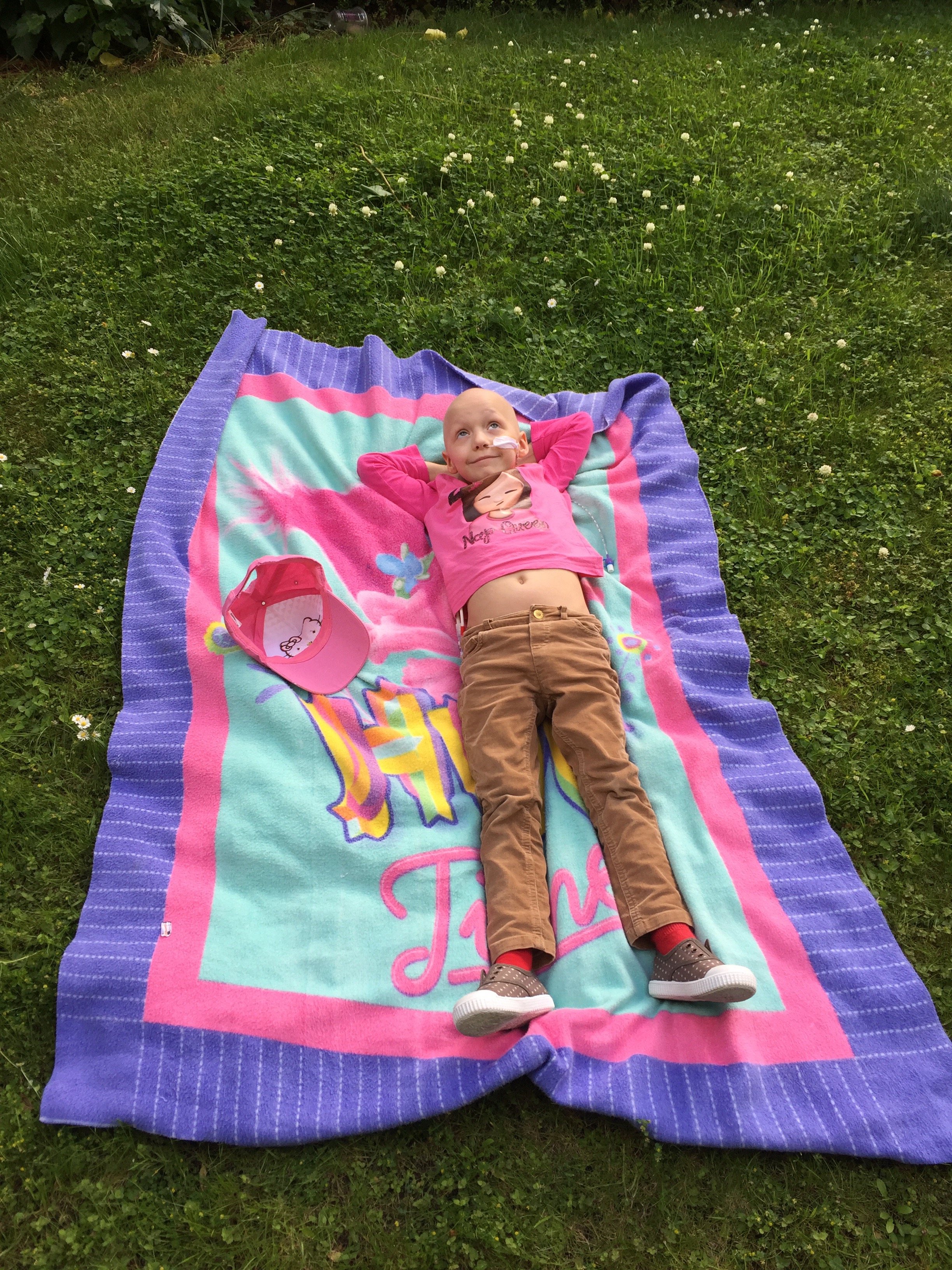
Indomitable Isita

It is immensely difficult for us to keep our patience and calm in this period of waiting. As the doctors have discussed Isita’s case with us, our realisation of how complex it is has grown. We are no longer in the standard protocol for treating what is already a difficult and complicated disease. Isita has, for instance, fallen out of the medical trials that she was originally participating in, because her treatment has breached the parameters. This is an uncomfortable feeling. The fears and the risks are ever present in our minds. But despite everything, Isita is indomitable and has attracted huge admiration on Elephant Ward. Last night one of the nursing assistants was telling me how much Isita makes her laugh. “She’s an inspiration!”

Although it may be quite dull to have a father banging on about how amazing his daughter is, in this case I have no choice but to continue. It seems nothing can get her down. She is now on the third or perhaps the fourth day of ‘nil by mouth’ – water only – a treatment which the gastroenterologists hope will give her shattered gut time to recover and repair itself. She gets all the nutrients and energy she needs through her intravenous line. Of course, she is hungry. Even so, she remains the happy cheerful girl who bosses the nurses around and who impresses everyone with her ability to handle whatever hospital life throws at her. 

When she gets off her ‘TPN’ every afternoon we take her down to Coram Fields to swing as high as she can on the swings and to zoom down the zipwire. Over the past week, Marta and I have had difficulty in reconciling the energetic fighter whom we see every day, with the fragile medical conundrum that the doctors see in their analyses of blood, urine and stools. In general, we have decided that we see her better.

​Happily, it seems that we may now be returning to a point where medical decisions can be taken and advances made in her treatment. Alongside the fundamental objective of eradicating the tumour, we have to get rid of the last traces of adenovirus, fix Isita’s guts and allow her kidneys to recover more of their function. 

Today we were told that a more effective anti-viral drug with fewer side-effects is even now on its way to GOSH from the USA. Once it is administered, it may take a couple of weeks to complete the job. The medical team may decide that Isita should continue ‘nil by mouth’ to reduce the danger of a recurrence of diarrhoea during this period. Or they may permit a very strict and gradual return to eating. The kidneys must be allowed to recover on their own. 

 As we are now more than a month away from the last cycle of chemo, they may decide to put her on another cycle simply to keep the tumour from reactivating. We should see movement in most of these areas over the next few days. It is certain that the main steps towards the stem cell harvest and the administration of high dose chemotherapy won’t be taken for at least a fortnight.

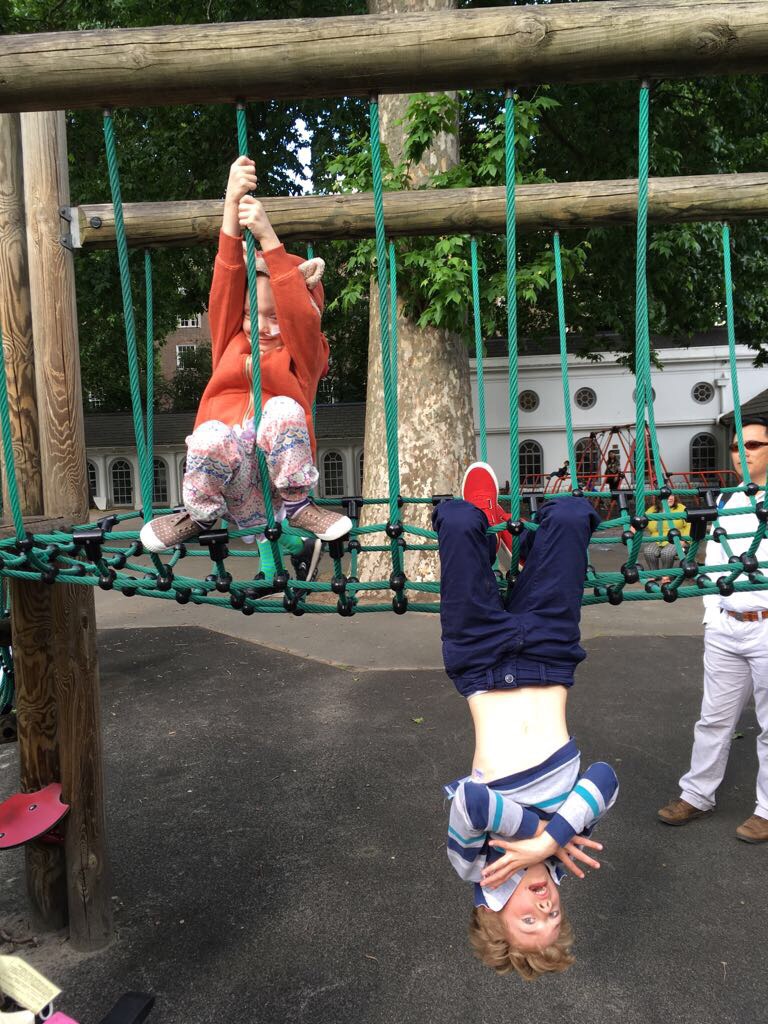
P.S. Jamie is a very cool elder brother. J.

Adeno 600

Marta just called home with the latest update from GOSH. The adenovirus count is down from over 800 on Saturday to 600 today, Tuesday. This is progress in the right direction.

A good fall

On Saturday I took Jamie fishing in Hampshire with his godfather Charlie. 


Marta was with Isita, her sister Bego and brother Juan who had heroically flown over from Seville on Friday night. Thanks mostly to my own incompetence I didn’t catch anything, but Jamie went swimming at least three times and had to have his clothes dried out in the plate-warming oven. It felt wonderful to be on the banks of a trout stream with some of my oldest friends and their children. 

Even better was when Marta called to say that Isita’s adenovirus level had fallen to just over 800 copies/ml of blood. This is such a good fall, that it has raised the doctors’ hopes that she may be able to eradicate the virus without needing further medication. 

Let’s hope that is the case because on Sunday morning the diarrhoea came back. We have been contending with it over the past two days. It remains a puzzle in that we do not know what has caused it, and this is massively stressful because it makes us unpick everything we have done with Isita, such as taking her out of the hospital, to see whether it is something we could have prevented or could prevent in the future. Is it somehow our fault? 

The doctors say no and that is probably right. We are trying to take as much care as possible but it is not easy. Isita is hungry and full of energy. It is hard to restrain her from eating too much or too quickly, particularly as we have spent the past five months begging her to eat whatever she wants.

One thing we do know – which is good news – is that Isita’s upset stomach is certainly not caused by the adenovirus,. This means that this new onset ought not to stop the virus load falling. We will learn whether that is the case very soon..

Up and down 

Isita is full of life and happiness. She has taken to frequently hugging her nurses. Her high spirits have been greatly helped by the visits of so many friends from school and elsewhere, even over the bank holiday. Those who have come along to her little domain on Elephant Ward include Elspeth, Isla, Rebecca, Lily Rose, Lola, Ginny and Hannah. John and Benedict also came with Violet and Alex. As it is absolutely certain that Isita will not leave hospital for at least two months, it is brilliant that the world can come to see her from time to time.

Meanwhile, it has been an up and down week of worry and frustration on the medical side of things. Alongside the great bugbear of the tumour, we are still struggling against its sidekick the pesky adenovirus which stubbornly refuses to quit her system. It is blocking the road to the next – and most crucial – stage of treatment. 

The idea was after the bank holiday, if the virus load had fallen, we would go ahead with the stem cell harvest. Or if not, they would administer a new anti-viral drug, or start her on retinoid therapy which increases the chance that the tumour will remain dormant, or both. But one of the conditions for these plan B treatments was that Isita should not have diarrhoea. She didn’t on Thursday and Friday but by Saturday it had returned. This morning we discovered the viral load had increased from 1,600 copies/ml of blood to 5,000 copies/ml. It felt like stepping back or going round in circles.

Marta and I are worried because the longer we delay the start of high-dose chemo the higher the chances are of a relapse, undoing the achievements Isita has made with the induction chemotherapy to date. On Monday morning, she complained of a pain in her hips, something which has not troubled her since the chemotherapy started. It could have been caused by anything and has not returned. By the same evening she was running down the street outside the hospital in her blue tutu and doing gymnastics on the playmat in her room, so it was probably a false alarm. But anyway we are on tenterhooks.

The doctors are looking at everything, and testing everything. All the expertise of GOSH is being brought to bear: microbiologists, gastroenterologists and so on. One of the treatments under consideration is a lymphocyte transfusion. These are the blood cells which fight viruses. From what I understand they would have to take lymphocytes and ‘train’ them in the lab to develop the right adenovirus anti-bodies. Apparently, this technique hasn’t been used before against this type of virus so there is some uncertainty about it. But we are glad they are thinking about it. The doctors say that if Isita can get over the virus then everything else is going to be much easier as most of the negative side-effects she has suffered have been exacerbated by it.

The most encouraging words we have heard in recent days came from one of the nurses, who told Marta that Isita would definitely make it through the treatment because she is such a fighter. She is indeed. This evening just before bedtime, Isita called on Marta’s mobile to say she had done a “proper poo… a sausage”. I am so excited, I could almost put it in a tin like Piero Manzoni. This is what it is like right now, we are swinging from despair to hope every day.

Waiting game

Giuseppe came by and saw Marta and Isita yesterday afternoon. He explained the plan for the next stage of Isita’s treatment. Frustratingly, that plan involves more waiting. But we do, at least, know the direction. 

The most important decision is that surgery will not happen until after the high-dose chemotherapy. This is because of the risk that she will lose her right kidney as a result of the surgery. They want her to go into the high-dose chemo with both kidneys intact.

 Ideally, we would start the high dose immediately. We can’t do this because there are still traces of adenovirus in Isita’s blood so they can’t harvest her stem cells. She is no longer on anti-viral medication and despite this, the viral load tests show that the number of ‘copies’ in her blood is falling. A month and a half ago when she was most sick, there were several million per millilitre, then 100,000, a fortnight ago 10,000, last week 4,000, down to 3,000 back up to 3,500 and now 1,300. Soon we will be counting in hundreds. We are aiming for zero.

If the rate has fallen enough by next Tuesday, they will start gearing up for the stem cell harvest which takes a few days. A great indication that we are heading in the right direction is that Isita did a normal poo this morning. Sorry to be graphic, but amazingly we do mimic the crazy doctors in The Madness of King George III, peering into bedpans all the time and seeing if we can tell any difference. We have become students of the Bristol Scale.

 If the viral load has not fallen enough, Giuseppe has improvised a replacement therapy intended to maintain the benefits which the treatment has achieved to date, without creating additional side-effects which will set us back in other ways. He would start Isita on retinoid therapy. This is also known as differentiation therapy. It works by helping cancer cells mature into normal functional cells. 

Normally, it would be prescribed much later in the treatment and whatever happens Isita will go back to it later on. It is basically just a stop-gap to ensure that some treatment is going on as we get further away from the last date when chemotherapy was administered. The best thing for Isita will be if we can drive out the last traces of the virus as quickly as possible and get going with the stem cell harvest and high-dose chemotherapy.

Cherry Bomb!

Isita had a fabulous day today with a wonderful stream of visitors starting with Tante Joosje, then an artist who came to do some lino printing, a mobile library, then Dorothy and Chantal, whose electronic devices she ruthlessly commandeered.

She was free from all her tubes all afternoon so I took her down to the Lagoon café and then we wandered down Lambs Conduit Street in the afternoon sun in her pyjamas and bunny rabbit slippers. 

Back in the room she conked out after only a couple of chapters of the book I am reading her. Called Good Night Stories for Rebel Girls, it is an occasionally inaccurate but nevertheless engaging collection of vignettes of women and girls who have taken their own path in life. 

Some of them have made a big impression on her. She liked the story of Joan Jett because people told her band the Runaways they were too young.

 “So what” the band shouted.  And too loud: “they just played louder”. 

 Now as soon as she can get hold of my mobile, Isita opens the Subway Surfer app and plays it to a sound track of the Runaway’s 1978 punk rock classic ‘Cherry Bomb’. Of course she has learned the words:

Hello Daddy, 

Hello Mom,

I’m your ch-ch-ch-ch-ch-cherry bomb.

Hello world,

I’m your wild girl.

I’m your ch-ch-ch-ch-ch-cherry bomb.

Smaller but harder

Some better and some worse news today. Kate, the consultant surgeon, came this afternoon to tell us what she had seen in the CT scan they did last week. The better is that the tumour is very much smaller than it was. The worse is that from its base on the adrenal gland it is surrounding a junction of major blood vessels, meaning that in surgery Isita’s right kidney would be at severe risk. Other veins and arteries are also involved. 

The surgeon said it was as if the tumour were concrete poured around the roots of a tree. Her job is to free the roots without damaging them. She will pick away with a scalpel, even removing the outer surface of the blood vessels if necessary. But she will leave cancer tissue rather than do irrevocable harm.

Her concrete simile is apt also because the chemotherapy has calcified parts of the tumour. Is this good or bad? It makes the surgery much harder, but the calcified tissue may be dead. Dead tumour may be less necessary to remove. Can they tell what’s living and what’s dead? How much can be reasonably left? Would high-dose chemo kill a lot more of it? To fully understand what all this means we have to wait until the specialists have their weekly meeting on Thursday. 

What we know now is that the main negatives are the threat to the kidney and the probability that the surgeon will not be able to remove everything. We already knew it is never possible to remove the entire tumour, which is one reason the treatment is so long and hard and surgery its least important element. 

We were also warned at the beginning about the danger to the kidney. One possibility is that they will try to do the high-dose chemotherapy first, which is easier to recover from with two kidneys. This would calcify (kill?) more of the tumour making surgery harder still. But it would then be easier to sacrifice the right kidney.

I can’t deny that after the optimism of the other recent test results, we have been dunted by this news. But if there is one thing we have learned over the past months it is not to jump to conclusions. Despite all the science and precision, we are reliant on the judgement of the magnificent group of expert doctors who are looking after Isita. 

What ever happens the next couple of months will be testing. At these moments we have to draw on our own reserves of emotional strength, courage and faith and Isita’s too. And you would not believe how bright and strong Isita is right now..

Go for it, my darling!

Giueseppe came in to see Isita and Marta yesterday afternoon. The trephines are clear. It feels that our prayers (and all of yours – thank you) have been answered. This is the best news and means that the induction chemotherapy phase of Isita’s treatment has been as successful as it could be. Giuseppe told Marta that he had been expecting the clear result because she had reacted so severely to the toxicity of the drugs. This seems to be an area of cancer treatment which is still not perfectly understood. A month ago, when we were discussing how sick Isita was, he mentioned that the link between the side-effects and the efficacy of the treatment was still a matter of debate. But the cancer comes from Isita’s body and has her genes. So it makes sense.

The fact that Isita has reacted so severely to the chemo drugs is the main limiting factor on what happens next. She still has traces of the adenovirus in her blood and gut meaning that we can’t do the stem cell harvest yet. So, we can’t move straight on to high-dose chemotherapy. However, she also can’t go into surgery until her kidneys have tightened up and the level of platelets in her blood have risen. So right now we are facing a temporary blockage.

The quandary facing the doctors is that the main anti-viral drug is bad for the kidneys, in other words the treatments are working at cross-purposes. The most likely decision is therefore to stop treating the virus for the time being and to concentrate on getting Isita fit enough to undergo surgery. As she recovers from surgery they will then switch back to dealing with the virus? If necessary. These decisions are not easy, and Giuseppe is not pretending that they are.

The main task for Marta, myself and all the wonderful ‘aunties’ who come in every day to the hospital is to continue nurturing Isita and to monitor her progress as closely as possible. The general picture is that she is very fit, lively and happy. I am sure it won’t surprise regular readers to know that she has entirely charmed all the nurses on the ward. The other day she told Helen, the ward sister, that she had to say thank you to all the nurses because they were the important people who were making her better. Helen was super-chuffed. “I’m going to tell that to my own children when I get home”, she said. Earlier Isita had persuaded three lovely nurses to dance around her room, waving their arms above their heads like fairies.

At a practical level, we are working with the nurses to count everything which goes in and everything which comes out again. She has just gone 18 hours without an episode of diarrhoea. Dare we hope her system is recovering just when we need it to? At a more technical level, they are monitoring Isita’s platelets, neutrofils, lymphocytes and electrolytes i.e. everything in her blood, and every day things are getting a little bit better. Go for it my darling!